

Explore Our Articles and Blogs
Cognitive Development Milestones in Preschool: What to Expect and How to Support Learning

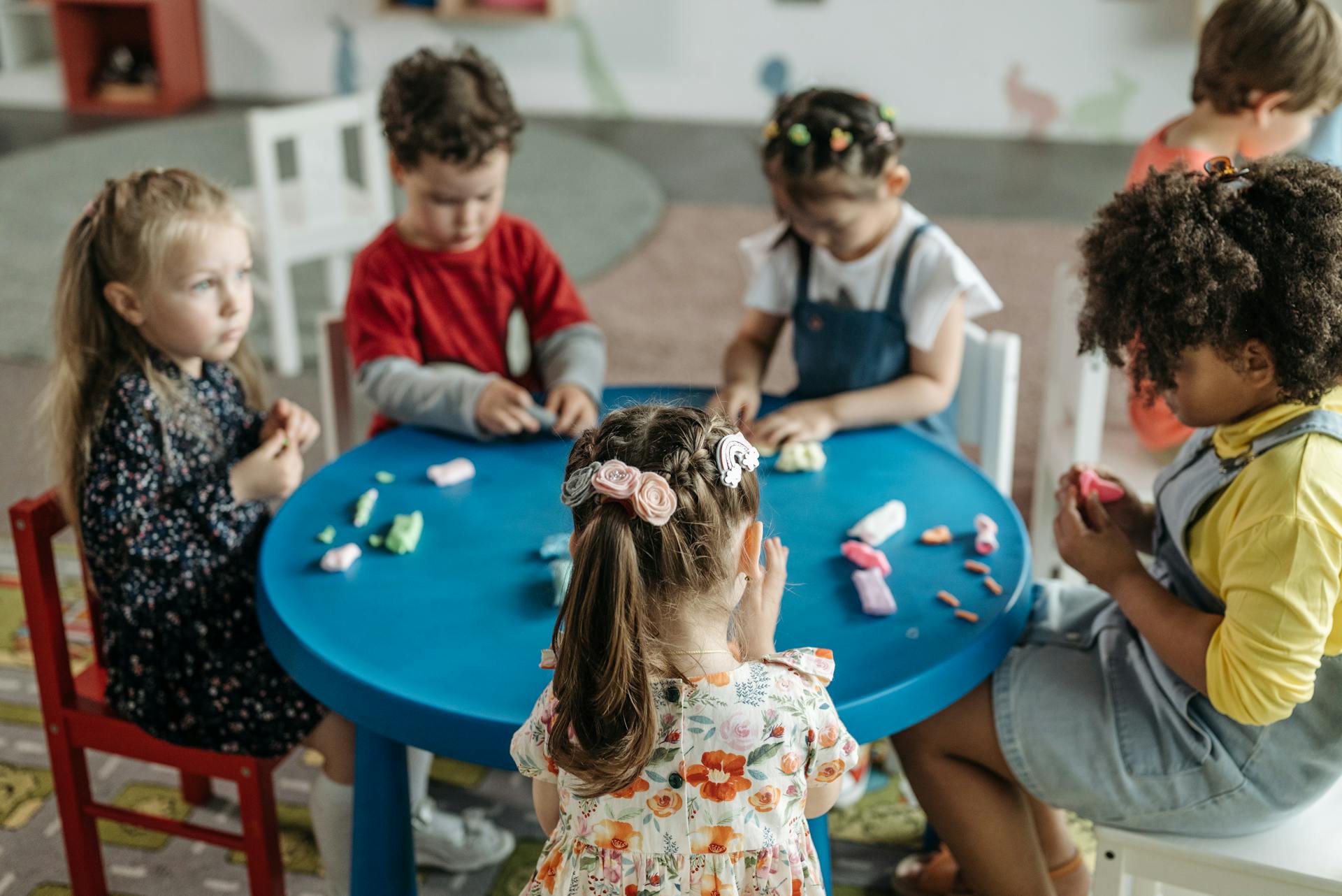
Preschool is a critical period for a child’s cognitive development. During these early years, children experience rapid growth in thinking, problem-solving, memory, and understanding of the world around them. Cognitive development refers to the process through which children learn to process information, develop reasoning skills, and gain knowledge through exploration, observation, and interaction. Understanding cognitive development milestones in preschool helps parents, educators, and caregivers support children effectively and provide age-appropriate learning opportunities.
What Is Cognitive Development in Preschool?
Cognitive development encompasses the growth of mental processes that allow children to think, learn, remember, and solve problems. In preschool, typically ages 3 to 5, children move beyond simple sensory exploration and start to engage in more complex thinking. They begin to understand cause and effect, develop attention span, recognize patterns, and improve memory. Cognitive development also supports language acquisition, social understanding, and early literacy and numeracy skills, making it foundational for lifelong learning.
Key Cognitive Development Milestones for Ages 3 to 5
While every child develops at their own pace, there are general cognitive milestones typically observed in preschool-aged children. These milestones include skills in memory, problem-solving, language, reasoning, and attention.
1. Memory and Recall
Preschoolers’ memory improves significantly during these years. They can remember recent events, recognize familiar people, and recall sequences of actions. For example, a 4-year-old might remember the steps to complete a simple puzzle or recall a story read the previous day. This growing memory capacity allows children to build on prior knowledge and begin to connect experiences, which is essential for learning new concepts.
2. Problem-Solving Skills
At the preschool stage, children demonstrate emerging problem-solving abilities. They can experiment with objects, identify solutions, and learn from trial and error. For instance, when building a tower with blocks, a preschooler may notice that certain shapes stack more stably than others. These experiences teach cause-and-effect relationships and encourage logical thinking. Preschoolers also begin to develop strategies to solve social problems, such as negotiating turn-taking during play.
3. Language and Communication Development
Language skills are closely tied to cognitive growth. By preschool, most children can form complete sentences, understand more complex instructions, and express ideas clearly. They ask questions to gather information, describe events, and engage in imaginative play using language. Vocabulary expands rapidly during these years, allowing children to categorize objects, compare and contrast, and understand abstract concepts. Strong language skills also support literacy development, as children start recognizing letters, sounds, and early word patterns.
4. Attention and Focus
Attention span improves dramatically in preschoolers. While 3-year-olds may focus on an activity for a few minutes at a time, 4- and 5-year-olds can engage in tasks for longer periods, particularly when the activity is hands-on or interests them. This increased attention enables them to follow multi-step directions, complete puzzles, participate in group activities, and sustain learning during circle time or storytime. Attention skills are foundational for academic readiness and self-regulation.
5. Understanding Cause and Effect
Preschoolers begin to understand cause-and-effect relationships in their environment. They learn that actions have consequences, such as pouring water on a plant helps it grow or tipping a toy car makes it roll. This understanding extends to social interactions, where children start predicting outcomes based on behavior, such as recognizing that sharing toys can lead to positive social interactions. Developing this reasoning skill is critical for problem-solving and decision-making.
6. Concept Formation and Categorization
Children in preschool start to categorize objects based on characteristics like shape, color, size, or function. They understand basic concepts such as “more” or “less,” “big” or “small,” and “same” or “different.” They can also begin to classify objects into groups, such as sorting blocks by color or sorting animals by habitat. Concept formation is essential for developing early math skills and logical reasoning.
7. Imagination and Symbolic Thinking
Preschoolers’ ability to engage in imaginative and symbolic play grows rapidly. They can pretend that a block is a car, a stick is a sword, or a doll represents a baby. This type of play supports creativity, problem-solving, and cognitive flexibility. Symbolic thinking also lays the foundation for literacy, as children begin to understand that written words represent objects, ideas, or sounds.
8. Early Numeracy Skills
Preschool-aged children start developing early math skills, including counting, recognizing numbers, and understanding simple mathematical concepts. They can often count to ten or higher, match quantities to numbers, and identify patterns in objects or shapes. These foundational skills are crucial for later success in math and STEM learning. Hands-on activities like sorting, measuring, and simple addition or subtraction with objects help strengthen these concepts.
9. Understanding Time and Sequences
By the end of preschool, children begin to understand simple sequences and concepts of time. They can describe routines, recall what happened yesterday, or predict what might happen next in a story. Understanding sequences helps with memory, planning, and logical thinking and supports reading comprehension and storytelling abilities.
10. Problem-Solving in Social Contexts
Cognitive development in preschool also includes navigating social situations. Children learn to negotiate, share, and resolve conflicts with peers. They can consider other people’s perspectives, recognize rules, and understand fairness in games or group activities. Social problem-solving strengthens emotional intelligence and prepares children for cooperative learning in kindergarten and beyond.
Supporting Cognitive Development in Preschool
Preschoolers benefit from rich, stimulating environments that encourage exploration, experimentation, and discovery. Activities that involve hands-on learning, open-ended play, and guided exploration support cognitive growth. For example, building with blocks enhances spatial reasoning, conducting simple science experiments teaches cause and effect, and storytelling fosters language and memory. Educators and parents can enhance learning by asking questions, encouraging problem-solving, and providing opportunities for children to express their ideas.
Interactive learning, including sensory activities, dramatic play, and outdoor exploration, helps children integrate cognitive skills across multiple domains. Collaborative play with peers supports both cognitive and social-emotional development. Children learn from observing others, exchanging ideas, and working together to solve problems, which strengthens reasoning, communication, and memory skills.
Why Monitoring Milestones Matters
Understanding cognitive development milestones helps teachers and caregivers identify children’s strengths, as well as areas that may require additional support. While children develop at different rates, early identification of delays or challenges allows for timely intervention. Supportive, engaging environments can bridge gaps and encourage growth, ensuring that all children enter kindergarten ready to thrive academically, socially, and emotionally.
Cognitive development in preschool is a dynamic and crucial stage in a child’s life. From memory and problem-solving to language, attention, and early numeracy, preschoolers make remarkable strides in understanding and interacting with the world. Recognizing and supporting these milestones allows educators and parents to provide meaningful experiences that foster curiosity, creativity, and lifelong learning. By creating enriched learning environments, offering hands-on activities, and encouraging exploration, adults can help children reach their cognitive potential and prepare them for continued success in school and beyond. Duneriat